
3 great poems by Robert Frost, narrator John McWade, illustrator David Bell, designed kiwiconnexion
Jun 12, 2022•Channel
AI Analysis
Data from YouTube Data API v3•Updated Just now
Video Overview
Video Details
PublishedJun 12, 2022
Duration6:56
Video IDLtzTio7VNKI
Languageen-GB
CategoryNonprofits & Activism
PrivacyPublic
Made for KidsNo
Video TypeRegular Video
Performance Metrics
Views138
Likes6
Comments2
Engagement Rate5.80%
Likes per 100 views4.35
Comments per 1K views14.49
Video Tags
Description
3 great poems by Robert Frost, narrator John McWade, illustrator David Bell, designed kiwiconnexion
TIMESTAMPS
00:00 Mending Wall
03:50 There are roughly zones
05:58 Nothing gold can stay
“Mending Wall,” by the American poet Robert Frost, was first published
in 1914 in his second collection of poetry, North of Boston. Its
literary success established his career.
It came back to prominence just prior to the Cuban missile crisis
when Frost was sent by John F Kennedy on a diplomacy mission to the
USSR. It has been used for much political commentary since then..
It is one of those rare poems which can be found in countless anthologies,
hence read and appreciated by generation upon generation the
world over. Frost wrote in the plain speech of New England farmers.
Yet, the cadences pulse with deeper, darker themes, paradoxes inherent
in all human relationships.
There is on the surface a light-hearted playfulness between the two
characters, but underneath a serious and uncomprehending suspicion.
Frost draws out elemental, archetypal confrontations. We must behave
decently, to build-up relationship with and for our neighbour. Yes, but
there is more to it. Is the annual act of rebuilding a fallen stone wall,
brought down by the march of the seasons, and other more direct
human interventions, truly an act of generosity of spirit, a building
of goodwill or—quite the opposite—an insistent act of primitive and
crude separation, an exclusion of the neighbour, to keep him out, as if
an enemy? These are, of course, essential Gospel themes.
An Interpretation of There Are Roughly Zones by Robert Frost
What the poem means to me: it brings the colours of bitter cold mornings and evenings to mind, the bite of sub-Antarctic winds along the Old Man range in Central Otago. It evokes musical fragments, which haunt, like Frost's phrases. And, most of all, it makes me wonder how these truths can best be said, best narrated. Frost was no sentimentalist, and even less theologically motivated. Nature, in his estimate, was not kind but cruel. And the nature of the human mind and indeed the human heart, morally and emotionally ambiguous. Yet, when all is said and done, discussed and weighed, there will emerge "roughly zones whose laws must be obeyed".
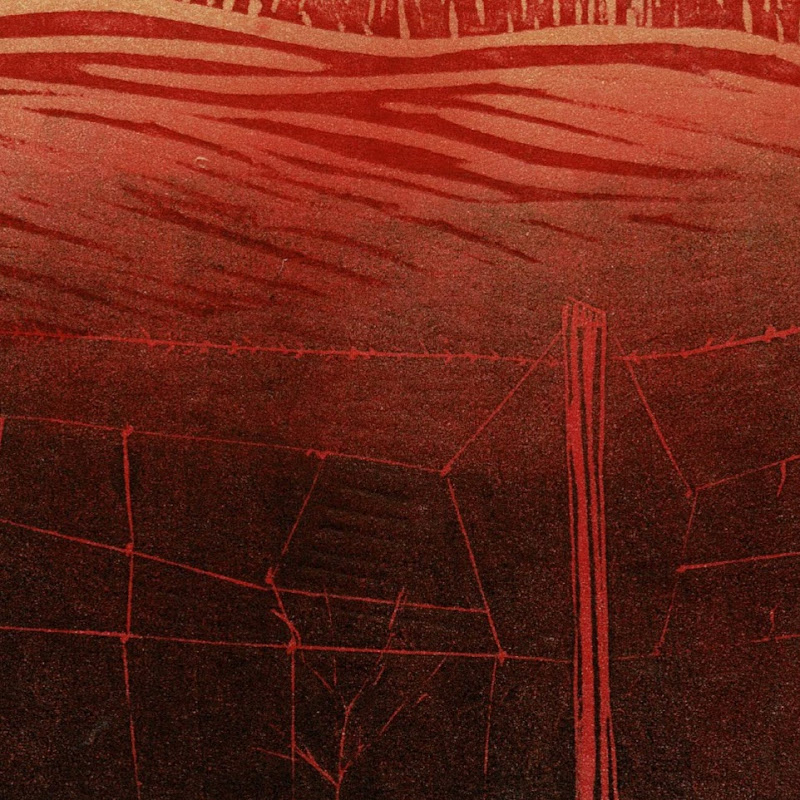
Nothing gold can stay by Robert Frost - David Bell etching, Terry Wall poetry analysis kiwiconnexion
David Bell writes,
"In most ways Frost's poems invite us to go beyond the literal meanings to create worlds within, where are confronted with the issues that count in life. What are we to make of life, death, love, hate, and the states between. Nothing gold can stay is like getting to the core of the issues raised by that Old Testament wisdom writer, Ecclesiastes, 'For everything there is a season...' Creating these graphics as intaglio etchings was a both a challenge and delight"
Terry Wall says of Frost,
"In the simplest but polished language Robert Frost examines the human condition.
The day serves as an image for life which he sees as innocent and maybe pure at the outset.
Dawn is the privileged moment of beauty and goodness which decay into ugliness and falsehood.
Gold focuses the freshness and innocence of first rays that are uncontaminated by time.
The golden sheen of original radiance, gives way to faded and disrupted experience.
The poem traces the inevitable transitory nature of life with its disappointment and pain, and sometimes anguish and despair.
Perhaps this mirrors the poet’s personal journey of depression related to family bereavements.
The mention of Eden references the doctrine of the Fall in which the image of God in each person is tarnished, damaged or in more radical theologies, even broken or lost entirely.
Is this pessimism or merely a robust realism? Does the poem leave room for personal growth that comes through age and reflection?"
Rebecca Livingston's lovely playing and John McWades superb narration make this section of the project, The Soul, Unguarded Now, very worthwhile.
Home of kiwiconnexion.nz and AIM publishing, and outreach from Trinity-at-Waiake Methodist Church, Auckland. Here you will find creative tips and techniques for doing the art of printmaking, and applying it into the world of practical theology. There are also wisdom choices for better daily living. Explore contemporary spirituality, Christian thought and church history, and a very special emphasis on John Wesley and Methodism. These are our touchstones. Art, printmaking, etching, intaglio and relief, and artist books, videos and ebooks feature in our creative outputs.
Also for watching about social media marketing watch @https://www.youtube.com/c/StuartMacadam