
STOP Losing Muscle As You Age (IMPORTANT!)
Oct 2, 2025•Channel
AI Analysis
Data from YouTube Data API v3•Updated Just now
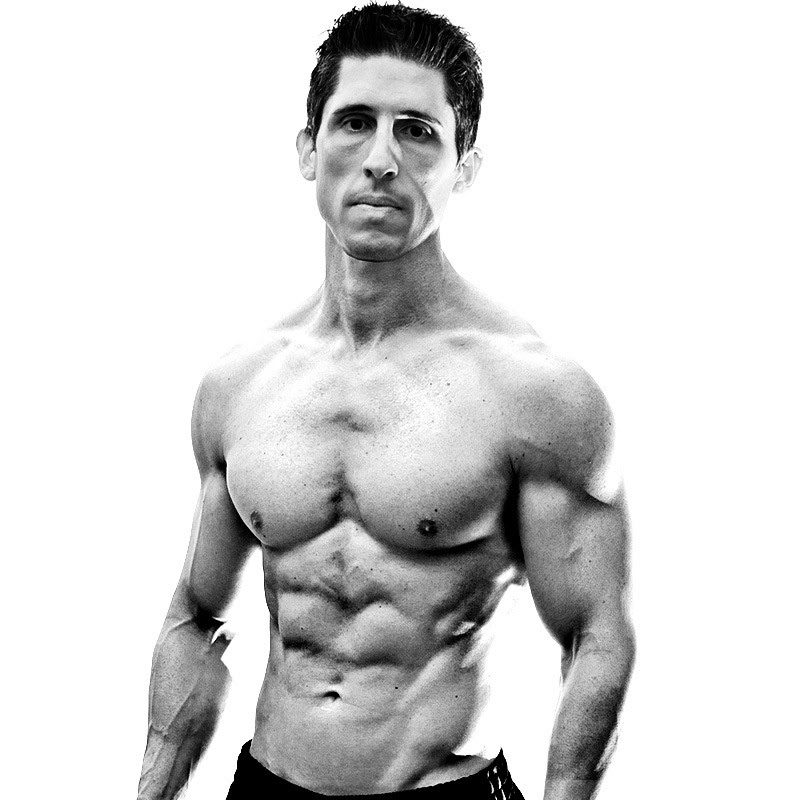
Video Overview
Video Details
Published8 months ago
Duration17:14
Video IDk0I9fFTekas
Languageen
CategoryHowto & Style
PrivacyPublic
Made for KidsNo
Video TypeRegular Video
Performance Metrics
Views52.2K
Likes3.3K
Comments277
Engagement Rate6.76%
Likes per 100 views6.23
Comments per 1K views5.30
Video Tags
#how to build muscle#how to stop losing muscle#how to keep muscle#how not to lose muscle#how to build muscle over 40#how to build muscle over 50#how to build muscle over 30#best way to build muscle#how to increase strength over 40#how to get in shape over 40#how to live longer#how to lift for longevity#best way to lift over 40#how to lift over 40#workout for men over 40#diet for men over 40#workouts for men over 40#athlean x#athleanx#jeff cavaliere
Description
As you age, it is natural to start to lose muscle mass. But did you know, the rate of loss of muscle and strength beyond the age of even 30 starts to occur much faster than you would have thought. The good news is, there is something you can do about it to slow, if not completely stop, the mechanism from wasting away your muscles year after passing year.
Build Muscle at Any Age Here - http://athleanx.com/x/muscle-at-any-age
Subscribe to this channel here - http://bit.ly/2b0coMW
Here are the ways that muscle is lost, and what you can do about it.
1. Protein Dose–Response Curve
Key Studies: Cuthbertson et al., FASEB J 2005; Moore et al., J Gerontol 2015
When you’re in your 20s, a moderate amount of protein, about 20 to 25 grams at a meal, is usually enough to max out muscle protein synthesis. But as you age, this response becomes blunted. In fact, landmark studies show that the same 20 grams that worked in young adults barely moves the needle in older adults. To overcome this, older lifters need closer to 35 to 40 grams of high-quality protein per meal.
2. mTOR Signaling Pathway Blunting
Key Studies: Breen & Phillips, Nutrients 2011; Dickinson et al., AJCN 2013
mTOR is the master growth switch in your muscles. When you lift weights or eat protein, signals converge on this pathway, activating downstream proteins to turn on muscle protein synthesis. In young adults, this system is highly responsive. But in older adults, the same stimulus results in weaker activation. Older muscles need stronger inputs - more protein and higher training intensity.
3. Leucine Threshold Concept
Key Studies: Katsanos et al., AJCN 2006; Yang et al., AJCN 2012
Leucine is the key amino acid that flips on mTOR, and aging muscle has a higher leucine ‘threshold.’ For a younger lifter, 2 grams of leucine may be enough to activate muscle protein synthesis. For older adults, that threshold often rises to 3 or 4 grams. Katsanos showed that when older adults were given extra leucine with their protein, their anabolic response improved significantly.
4. Effective Reps & Exercise Intensity
Key Studies: Kumar et al., J Appl Physiol 2009; Morton et al., Front Physiol 2015
One of the most overlooked factors in aging muscle is how you train. Kumar’s study showed that when older adults lifted lighter weights, they barely stimulated muscle protein synthesis. But when the load was heavy enough, or when they pushed close to failure, the difference between young and old practically disappeared. That’s because effective reps, those last few challenging ones are what recruit the high-threshold muscle fibers responsible for growth.
5. Reduced Satellite Cell Activity
Key Studies: Kadi et al., FASEB J 2004; Verdijk et al., J Gerontol 2014
Satellite cells are the repair and growth engines of muscle. They live on the outside of muscle fibers, ready to activate when damage occurs. In young people, resistance training sparks a big increase in satellite cell activity, they multiply, fuse to fibers, and support hypertrophy. But studies by Verdijk and Kadi have shown that older adults not only have fewer satellite cells overall, but the ones they have are less responsive to training.
6. Increased Inflammation & Oxidative Stress
Key Studies: Petersen et al., J Clin Invest 2003; Ferrucci & Fabbri, Nat Rev Cardiol 2018
As we age, our bodies enter a state called ‘inflammaging’ (chronic, low-grade inflammation). Add in more oxidative stress, and the muscle environment becomes less anabolic.The good news is that lifestyle factors, a diet rich in antioxidants, omega-3 supplementation, stress reduction, and regular exercise can help.
7. Hormonal Decline with Age
Key Studies: Harman et al., J Clin Endocrinol Metab 2001; Veldhuis et al., JCEM 2005
Hormones are the background music for muscle growth and with age, the volume steadily fades. Testosterone declines by about 1% per year after age 30, growth hormone pulses are smaller, and IGF-1 levels fall. Lower anabolic hormones mean the environment is less favorable for building muscle, even if training and nutrition are on point. Resistance training itself can increase hormonal sensitivity.
8. Reduced Blood Flow & Nutrient Delivery
Even if you eat the perfect protein meal, the amino acids still have to get to the muscle. That requires blood flow. Rasmussen and Phillips noted that older adults often have reduced endothelial function. Fujita confirmed this by showing that after a protein-rich meal, younger adults saw a big increase in muscle blood flow and amino acid delivery, while older adults had a blunted response.
For step by step solutions to each of these problems make sure to watch this video and for more science based fitness and health videos be sure to subscribe to our channel here via the link above.
For a complete workout program and meal plan that can help you build muscle at any age, be sure to visit athleanx.com and get the ATHLEAN-X Training System. No guesswork. Just Results.